
Structure, Function, and Uses of DNA
Introduction
Deoxyribonucleic acid (DNA) is the fundamental molecule of life that stores and transmits genetic information in almost all living organisms and many viruses. Often referred to as the “blueprint of life,” DNA contains the instructions required for the growth, development, reproduction, and functioning of cells. Every organism, from simple bacteria to complex multicellular organisms such as plants, animals, and humans, relies on DNA to maintain biological processes and pass hereditary traits from one generation to the next. Since the discovery of its double-helix structure by James Watson and Francis Crick in 1953, with significant contributions from Rosalind Franklin and Maurice Wilkins, DNA has become one of the most extensively studied molecules in biology and medicine.
Structure of DNA
DNA is a long, double-stranded molecule composed of repeating units called nucleotides. Each nucleotide consists of three essential components:
-
A deoxyribose sugar
-
A phosphate group
-
A nitrogenous base
There are four nitrogenous bases found in DNA:
-
Adenine (A)
-
Thymine (T)
-
Guanine (G)
-
Cytosine (C)
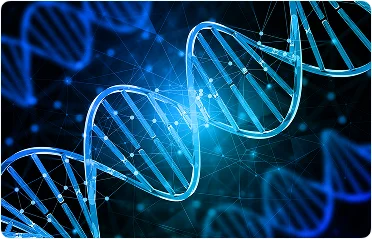
The nucleotides are connected by phosphodiester bonds to form a sugar-phosphate backbone. The two DNA strands run in opposite directions (antiparallel) and twist around each other to form the famous double helix.
The nitrogenous bases pair specifically through hydrogen bonds:
-
Adenine pairs with Thymine (A–T) through two hydrogen bonds.
-
Guanine pairs with Cytosine (G–C) through three hydrogen bonds.
These complementary base-pairing rules ensure accurate DNA replication and transmission of genetic information. The DNA double helix is highly stable due to hydrogen bonding and base stacking interactions, allowing genetic information to be preserved over long periods.
In eukaryotic cells, DNA is packaged around proteins called histones to form chromatin. During cell division, chromatin condenses into chromosomes, making DNA easier to organize and distribute equally to daughter cells. Humans possess 46 chromosomes arranged in 23 pairs, containing approximately 3.2 billion base pairs.
Functions of DNA
DNA performs several critical functions that are essential for the survival of living organisms.
1. Storage of Genetic Information
The primary function of DNA is to store hereditary information. The sequence of nucleotides serves as a genetic code that determines the characteristics and biological functions of an organism. Every gene represents a specific DNA sequence that contains instructions for producing proteins or functional RNA molecules.
2. Protein Synthesis
DNA directs protein synthesis through two major biological processes: transcription and translation.
During transcription, a segment of DNA is copied into messenger RNA (mRNA). The mRNA then carries the genetic instructions from the nucleus to the ribosomes, where translation occurs. During translation, ribosomes read the mRNA sequence and assemble amino acids into proteins.
Proteins perform countless functions within cells, including enzyme activity, structural support, transportation of molecules, immune defense, and regulation of cellular processes.
3. DNA Replication
Before cells divide, DNA must replicate to ensure that each daughter cell receives an identical copy of the genetic material. DNA replication is a highly accurate process involving enzymes such as DNA polymerase, helicase, ligase, and primase. The complementary base-pairing mechanism allows each original strand to serve as a template for synthesizing a new strand, producing two identical DNA molecules.
4. Regulation of Gene Expression
Not all genes are active at the same time. DNA contains regulatory sequences that control when and where genes are expressed. Gene regulation enables different cell types, such as nerve cells, muscle cells, and liver cells, to perform specialized functions despite containing the same genetic information.
5. Genetic Variation and Evolution
DNA mutations introduce genetic variation within populations. While some mutations are harmful or neutral, others may provide beneficial traits that improve survival and reproduction. Over many generations, these variations contribute to evolution through natural selection.
Types of DNA
Although DNA generally follows the double-helix structure, it can exist in several conformations.
B-DNA
B-DNA is the most common form found under normal physiological conditions. It is a right-handed helix with approximately ten base pairs per turn.
A-DNA
A-DNA is a shorter and wider right-handed helix that forms under dehydrated conditions. It is often observed during DNA-RNA hybrid formation.
Z-DNA
Z-DNA is a left-handed helix with a zigzag backbone. Although less common, it may play roles in gene regulation and chromatin organization.
DNA in Different Organisms
DNA organization varies among organisms.
Prokaryotes
In bacteria and archaea, DNA is typically circular and located in the nucleoid region without a surrounding nuclear membrane. Many prokaryotes also contain plasmids, which are small circular DNA molecules carrying additional genes such as antibiotic resistance genes.
Eukaryotes
In plants, animals, fungi, and protists, DNA is linear and enclosed within the nucleus. Eukaryotic cells also contain mitochondrial DNA, while plant cells possess chloroplast DNA in addition to nuclear DNA.
Applications and Uses of DNA
The discovery and understanding of DNA have revolutionized numerous scientific and medical fields.
1. Medical Diagnosis
DNA analysis enables early diagnosis of inherited genetic disorders such as cystic fibrosis, sickle cell anemia, Huntington’s disease, and thalassemia. Molecular diagnostic techniques can identify disease-causing mutations with high accuracy.
2. Personalized Medicine
Genetic testing helps physicians determine the most effective medications and treatment strategies based on an individual’s genetic profile. Pharmacogenomics minimizes adverse drug reactions and improves therapeutic outcomes.
3. Forensic Science
DNA fingerprinting is widely used in criminal investigations to identify suspects from biological evidence such as blood, saliva, hair, or semen. DNA profiling is also valuable in paternity testing, disaster victim identification, and missing-person investigations.
4. Biotechnology
DNA technology supports recombinant DNA production, genetic engineering, gene cloning, synthetic biology, and the development of genetically modified organisms (GMOs). These applications have improved medicine, agriculture, and industrial biotechnology.
5. Agriculture
DNA-based techniques are used to develop crops with improved yield, disease resistance, drought tolerance, and enhanced nutritional value. Marker-assisted breeding accelerates the selection of desirable plant and animal traits.
6. Disease Detection
DNA amplification techniques such as Polymerase Chain Reaction (PCR) enable rapid detection of bacteria, viruses, fungi, and parasites. During the COVID-19 pandemic, PCR-based DNA and RNA detection became one of the most important diagnostic tools worldwide.
7. Evolutionary Biology
Scientists compare DNA sequences among different species to investigate evolutionary relationships, trace ancestry, and study biodiversity. Ancient DNA analysis has also provided valuable insights into extinct organisms and early human evolution.
8. Conservation Biology
DNA analysis helps identify endangered species, monitor genetic diversity, detect illegal wildlife trade, and design effective conservation strategies.
9. Gene Therapy
Gene therapy aims to treat inherited diseases by replacing or repairing defective genes. Advances in genome editing technologies, particularly CRISPR-Cas9, have significantly expanded the potential of DNA-based therapies.
Advantages of DNA Technology
DNA technologies provide several important benefits:
-
Highly accurate genetic identification.
-
Early detection of inherited and infectious diseases.
-
Improved medical treatments through personalized medicine.
-
Enhanced agricultural productivity.
-
Reliable forensic investigations.
-
Better understanding of evolution and biodiversity.
-
Support for advanced biomedical research.
Challenges and Ethical Considerations
Despite its remarkable benefits, DNA technology raises ethical and social concerns. Genetic privacy, discrimination based on genetic information, unauthorized genetic testing, and the ethical implications of gene editing remain important issues. The responsible use of DNA technologies requires strong regulatory frameworks and ethical oversight to ensure that scientific progress benefits society while protecting individual rights.
Conclusion
DNA is the central molecule of heredity and one of the most important biological discoveries in modern science. Its unique double-helix structure enables the stable storage, replication, and transmission of genetic information across generations. Beyond its essential biological functions, DNA has transformed medicine, biotechnology, agriculture, forensic science, and evolutionary research. Modern DNA technologies continue to improve disease diagnosis, personalized medicine, genetic engineering, and conservation efforts. As scientific knowledge advances, DNA will remain at the heart of biological research and will continue to shape the future of healthcare, agriculture, and biotechnology while presenting new ethical and societal challenges.